Wellbeing is a journey. We'd love to walk it with you.
Each individual carries a unique combination of needs shaping their wellbeing. Whatever stage you're at, there's a next small step worth taking.


What actually moves the needle.
Some people seem to have a greater sense of wellbeing than others. Why? And what can the rest of us learn from them?
"Wellbeing" is increasingly used as a synonym for "happiness", but the two aren't quite the same. Wellbeing covers physical and psychological health, the quality of relationships between yourself and others, your sense of purpose and meaning, and even your financial situation.
Research has identified several things that meaningfully impact your wellbeing — and the good news is they're all within reach. These include practising gratitude, adopting a solution-focused mindset, and strengthening your sense of belonging and purpose.
Gratitude is probably the single biggest thing you could learn to positively impact your wellbeing. It's been shown to improve mood, immunity and sleep. Being thankful changes our brain chemistry — and it's both addictive and infectious.
Focusing on solutions rather than problems is critical to maintaining our wellbeing. Challenges are part of life, but shifting gear to think creatively about how to resolve them is empowering. It also gives you a framework to move through the situation quickly and effectively.
Fundamental to your sense of wellbeing is your support system: family, friends and those you share a sense of purpose with. Belonging to a group makes us feel valued, welcome, accepted and secure. Finding people who share your values dramatically increases your sense of wellbeing.
"Your wellbeing is a journey, and we'd love to be part of it."
Become an Affiliate


Are We Expecting Too Much From Our Leaders?
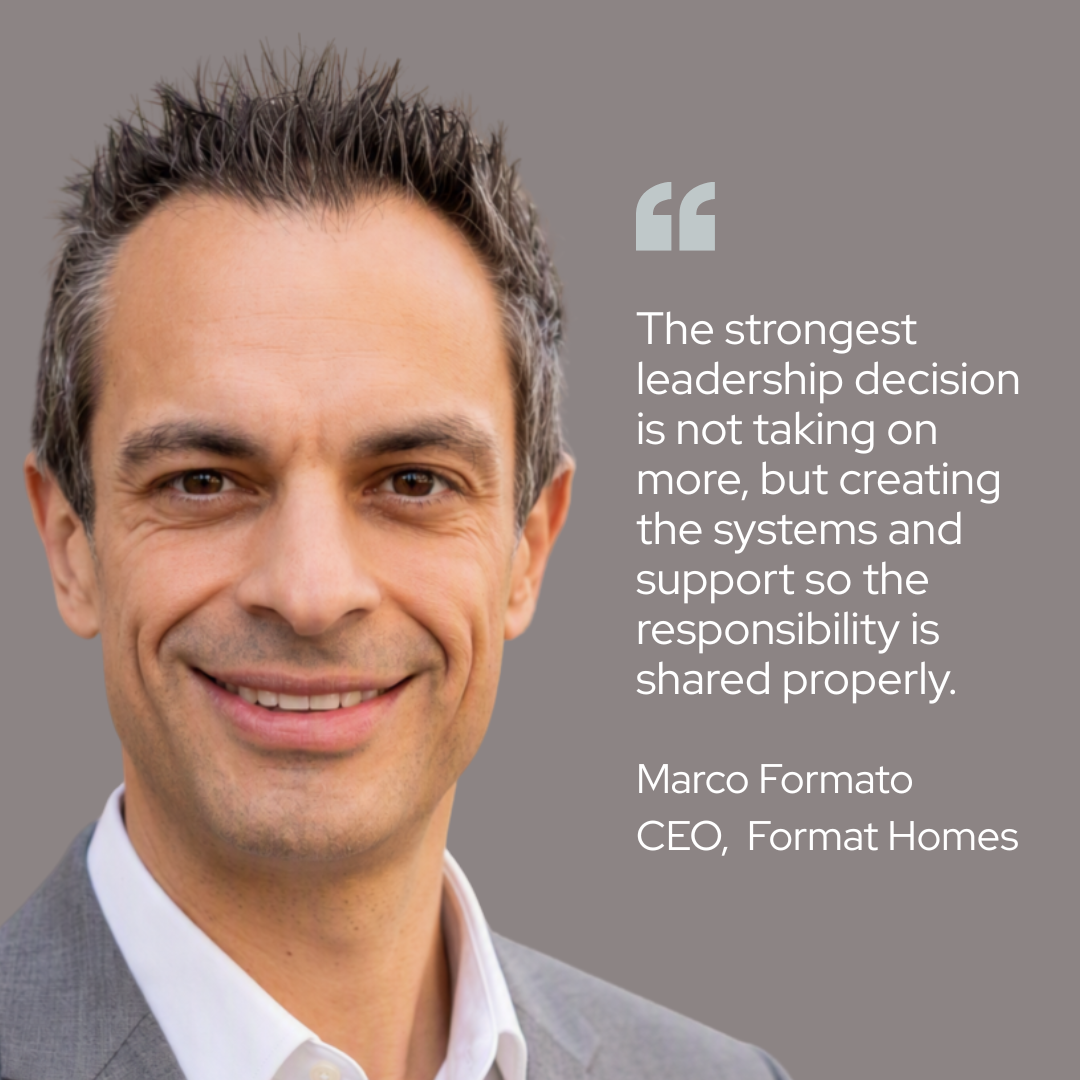
Written by Marco Formato
Over the past few years, particularly since COVID, I’ve noticed a significant shift in where responsibility sits.
It is not just organisations asking more of leaders. Governments, regulators, customers, employees and the wider community are all placing increasing expectations on businesses, and those responsible for leading them.
Leaders are now expected to navigate a growing list of responsibilities, from workplace health and safety, psychosocial wellbeing and compliance obligations, through to technology, cybersecurity, workforce challenges, environmental considerations, customer experience and organisational culture. In many cases, the accountability for these areas ultimately ends up resting with a relatively small group of people at the top.
Most of these expectations are reasonable when viewed individually. The challenge is that they rarely arrive in isolation. New requirements are often layered on top of existing responsibilities, while businesses are simultaneously being asked to improve productivity, remain competitive and control costs.
Since COVID, many organisations have also become leaner and more focused on efficiency. Combined with increasing external expectations, this has gradually shifted more responsibility, decision-making and risk management up the leadership chain.
Taking responsibility is part of leadership, and most leaders willingly accept that. The concern is that the accumulation happens slowly. Each new responsibility may appear manageable on its own, but over time the combined weight can have a significant impact on wellbeing.
The problem is that this can start to feel normal. You keep saying yes, you keep absorbing the pressure, and before long the workload becomes part of the identity of being a leader. But constantly carrying more does have an impact. It affects energy, patience, decision making, sleep, family time and the ability to properly support the people around you.
I think there is also a real risk that leaders unintentionally set the standard for everyone else. If staff see their leaders always available, always under pressure, always responding immediately and never switching off, that can quietly become the culture, even if it was never the intention.
There are a few things I think leaders can do to protect their own wellbeing, while still doing the job properly:
Be honest about what is genuinely urgent, and what can wait. Prioritize honestly.
Stop treating every problem as something that must be personally carried.
Delegate outcomes, not just small tasks, and give people room to take ownership.
Build personal recovery time into the week before it becomes a health issue.
Have trusted people you can speak to openly, whether that is a peer, mentor, adviser or someone outside the business.
Review your own workload regularly, not just your team’s workload.
Just as importantly, leaders need to look out for the people below them. That can be as simple as checking whether priorities are clear, whether workloads are realistic, whether people feel safe to raise concerns, and whether effort is being recognised before people get to the point of burnout.
Sometimes supporting others is not about having all the answers. It is about noticing when someone is overloaded, making it acceptable to speak up, and not rewarding unhealthy work habits as if they are a badge of honour.
Leadership should not mean carrying everything alone. A sustainable workplace needs leaders who are well enough to lead properly, and teams who feel supported enough to do their best work without burning out.
Interested in how others are managing this. Sometimes the strongest leadership decision is not taking on more, but creating the systems and support so the responsibility is shared properly.

About the Author
Marco Formato is the Chief Executive Officer of Format Homes. Through his leadership experience, he has seen first hand the increasing demands being placed on leaders and the impact this can have on wellbeing, workplace culture and organisational performance. He is a strong advocate for practical approaches that support both leadership effectiveness and employee wellbeing.

We acknowledge the Traditional Owners of Country throughout Australia. We pay our respects to Elders past and present. We recognise the First Peoples of this Nation and their ongoing cultural and spiritual connections to the lands, waters, seas, skies and communities.
LINKS
STAY CONNECTED


Copyright 2026. Wellbeing Australia. All Rights Reserved.