A decade of championing wellbeing in education.
From childhood to adulthood, formal classrooms to lifelong learning — we've spent a decade making wellbeing a foundation, not an afterthought.


Where learning meets wellbeing.
A love of learning feeds knowledge, builds resilience, and gives shape to a life of meaning. Each stage of education brings its own demands — and its own gifts.
Wellbeing Australia has a ten-year legacy of championing proactive wellbeing practices across education at every stage of life. Childhood to adulthood. Pre‑school to apprenticeship. Tertiary to lifelong learning. We've seen what works, and we've seen what gets left behind when wellbeing isn't built in.
A love of learning is foundational to wellbeing. It feeds knowledge, supports us in responding to challenge, and gives shape to a sense of purpose. That passion for growth — in ourselves and in the people we teach — matters at every stage of development.
We recognise education in all its forms: pre‑school, school, tertiary education, apprenticeships and internships, practical learning, and the ongoing personal development that happens long after the last classroom. Each stage brings its own dynamics, demands and gifts.
Global research is clear: positive psychology has a dramatic impact within educational frameworks. Both here in Australia and overseas, we're seeing a growing commitment to positive structures in education — supporting students to build social, emotional and academic literacy that carries through every stage of life.
Whether you're a teacher, leader, support worker or parent, there's a place for you in this work. Affiliate membership gives you access to current research, customised webinars, practical resources and a community of educators committed to making wellbeing more than just a poster on a classroom wall.
“Wellbeing belongs in every classroom — not as an extra, but as a foundation.”
Become an Affiliate


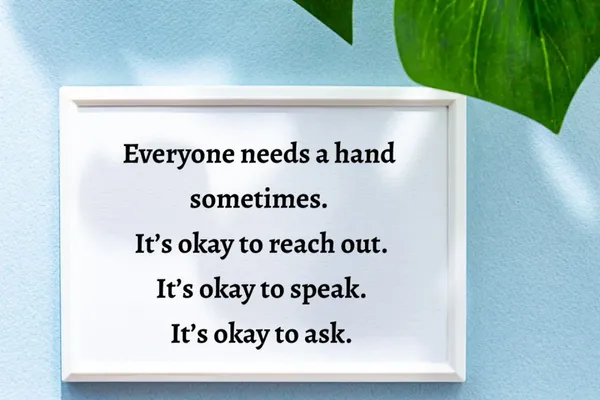
It’s Okay to Ask for Help – You’re Human
If you’ve ever been told to “keep it private,” that asking for help is “weak,” or that sharing your struggles makes things worse – this is for you.
You’re not wrong for wanting support.
You’re not dramatic for needing someone to talk to.
And you’re not disloyal for turning to friends, family, or colleagues when things feel heavy.
Humans were never meant to carry everything alone. We’ve always learned, healed, and endured through connection. Long before self-reliance was praised, survival depended on shared strength. Reaching out isn’t a failure of character, it’s an instinct for care and self-preservation.
Despite all the advances in knowledge and technology where human intelligence now spans centuries of research, fear around asking for help still exists. Research from global surveys shows that although people increasingly recognise that support is wise and beneficial, many still hesitate to seek it because of stigma, perceived judgment, or worry about how they’ll be seen by others. Nearly six in ten people around the world report feeling discouraged from reaching out for support, even when they want it. Progress has accelerated, but some of our deepest fears around vulnerability remain unchanged. (Reference: Business Wire). These numbers aren’t just statistics, they reflect the hesitation you might feel every day.
Culture plays a deep role in how people think about support. In some societies, traditional views about strength, independence, or self-reliance can make people less likely to ask for help. Studies across different countries find that cultural norms – such as beliefs that you should solve problems on your own, that vulnerability is shameful, or that seeking emotional support reflects weakness – can significantly reduce people’s willingness to seek care. (References: Springer Nature Link1,Springer Nature Link 2)
These barriers aren’t about intelligence or progress, they’re about old patterns of thinking that persist even as the world changes.
Sometimes the messages we receive about support are unspoken. They show up in hesitation, in discomfort, in the suggestion that some things are better kept quiet. Sometimes it’s subtle. Sometimes it’s learned. Over time, that pressure toward silence can make you doubt your own needs, leaving you second-guessing the weight of your feelings or wondering if they even deserve attention. You might begin to edit yourself before you speak, feeling the pause in your chest or the tightening in your throat, rehearsing your feelings into something smaller, more acceptable, translating “I’m struggling” into “It’s not a big deal.” Over time, that shrinking becomes automatic and you become fluent in downplaying your own experience. It can teach you to minimise your pain, to question your instincts, and to believe that asking for help is a burden or a betrayal.
It isn’t.
Talking to friends, family, or colleagues doesn’t make you weak. It means you’re listening to yourself. It means you understand that perspective matters, that shared weight feels lighter, that being seen can steady you when things feel unbalanced. Support doesn’t take anything away from you – it reminds you that your world is bigger than one situation, one voice, or one point of view.
If you ever feel discouraged from seeking support, pause and remember this:
Isolation is not care. Silence is not strength. Endurance without relief is not virtue.
You’re allowed to have people. You’re allowed to speak honestly. You’re allowed support – no explanation or apology needed.
And if no one has said it to you lately – wanting help doesn’t mean something is wrong with you. It means something inside you is trying to protect you. You always were.
Need Support? Here Are Australia’s Key Helplines
📞General & Crisis Support
Emergency (if you or someone is in danger):000
Lifeline Australia (crisis support & suicide prevention)– 13 11 14 (24/7)
Suicide Call Back Service (phone, online & video support)– 1300 659 467 (24/7)
Beyond Blue (anxiety & depression support)– 1300 22 4636 (24/7)
Friend Line (loneliness & connection support)– 1800 424 287 (7 days/week)
Health direct Nurse Helpline (health advice)– 1800 022 222 (24/7)
🎧Youth‑Focused Support
Kids Helpline (ages 5–25)– 1800 55 1800 (phone & online counselling, 24/7)
headspace (ages 12–25)– 1800 650 890 (phone & online)
headspace centres also offer in‑person support in many locations
online & phone support for youth and families
🧡Culturally Specific & Inclusive Support
13 YARN (Aboriginal & Torres Strait Islander crisis support)– 13 92 76 (24/7)
If you need immediate help, please call 000.
These services are here to listen without judgement and help you find the next steps, whether it’s emotional support, practical guidance, or connecting with someone who understands.
We acknowledge the Traditional Owners of Country throughout Australia. We pay our respects to Elders past and present. We recognise the First Peoples of this Nation and their ongoing cultural and spiritual connections to the lands, waters, seas, skies and communities.
LINKS
STAY CONNECTED


Copyright 2026. Wellbeing Australia. All Rights Reserved.