A decade of championing wellbeing in education.
From childhood to adulthood, formal classrooms to lifelong learning — we've spent a decade making wellbeing a foundation, not an afterthought.


Where learning meets wellbeing.
A love of learning feeds knowledge, builds resilience, and gives shape to a life of meaning. Each stage of education brings its own demands — and its own gifts.
Wellbeing Australia has a ten-year legacy of championing proactive wellbeing practices across education at every stage of life. Childhood to adulthood. Pre‑school to apprenticeship. Tertiary to lifelong learning. We've seen what works, and we've seen what gets left behind when wellbeing isn't built in.
A love of learning is foundational to wellbeing. It feeds knowledge, supports us in responding to challenge, and gives shape to a sense of purpose. That passion for growth — in ourselves and in the people we teach — matters at every stage of development.
We recognise education in all its forms: pre‑school, school, tertiary education, apprenticeships and internships, practical learning, and the ongoing personal development that happens long after the last classroom. Each stage brings its own dynamics, demands and gifts.
Global research is clear: positive psychology has a dramatic impact within educational frameworks. Both here in Australia and overseas, we're seeing a growing commitment to positive structures in education — supporting students to build social, emotional and academic literacy that carries through every stage of life.
Whether you're a teacher, leader, support worker or parent, there's a place for you in this work. Affiliate membership gives you access to current research, customised webinars, practical resources and a community of educators committed to making wellbeing more than just a poster on a classroom wall.
“Wellbeing belongs in every classroom — not as an extra, but as a foundation.”
Become an Affiliate


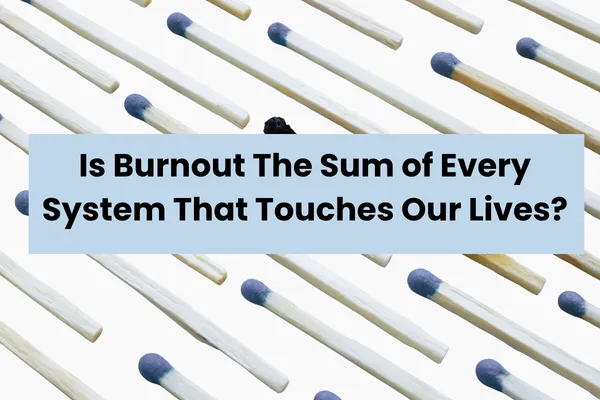
Is Burnout The Sum of Every System That Touches Our Lives?
By Joyce Kattunilath
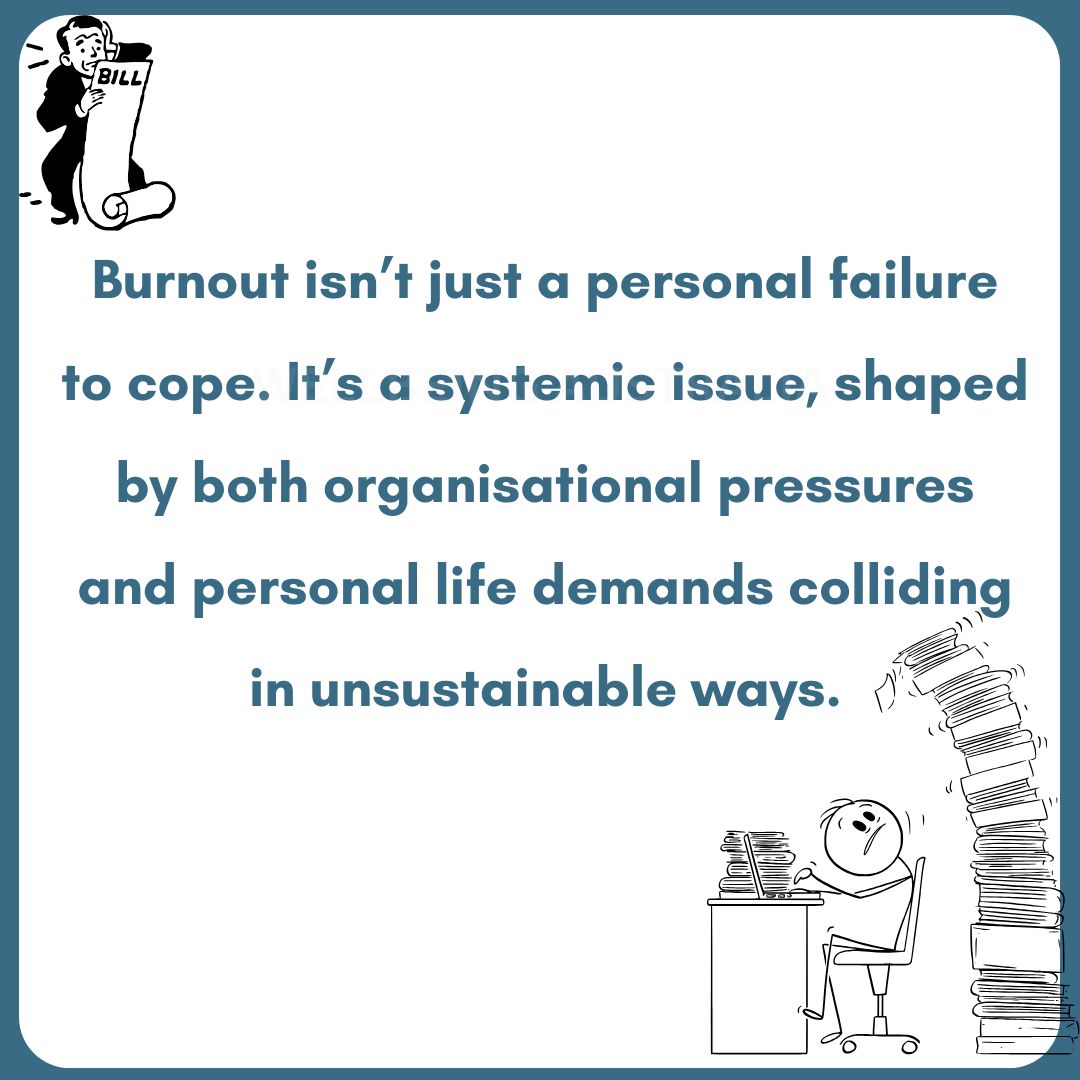
Burnout isn’t just a personal hiccup, it’s the smoke alarm going off because the whole ecosystem is overheating. And no, burnout isn’t just about struggling to cope or a lack of resilience or poor time management. It’s a systemic issue, shaped by both organisational pressures and personal life demands colliding in unsustainable ways.
We tend to frame burnout as an individual issue, something to be solved with better routines, breathing exercises, or the ever-present advice to “just build resilience.” But that narrative misses the point. Burnout isn’t a symptom of personal weakness. It’s a signal that the way we live and work isn’t sustainable.
This thought hit me, oddly enough, as the pressure cooker was hissing away, loud, relentless, impossible to ignore. And I caught myself thinking, this feels familiar. It reminded me of the reality many of us live every day. Work boiling over with urgency and noise while personal responsibilities quietly simmer in the background. Both demanding attention, both draining energy, and no real way to turn either off. That is exactly where the disconnect begins: the misalignment between ever-growing demands and limited capacity, between unrealistic expectations and real human limits. Life quietly simmering with constant demands while work hisses with urgency and deadlines, both running at once with no off switch in sight.
Let’s break it down.
Always On: The Slow Cooker Effect
Personal life pressures don’t always arrive with alarms blaring. More often, they simmer quietly, persistently, and just out of sight. It’s less of a pressure cooker explosion and more like a slow cooker left on high. You keep adding a variety of ingredients to this: school runs, ageing parents who need increasing care, financial uncertainties, health issues, last-minute appointments, stretched support systems, and expectations you never get to clock out from. Each demand on its own might seem manageable. But left to simmer day after day, with no chance to switch off or stir the pot, the contents eventually boil over. But home life isn’t the only kitchen where the heat is turned up.
What makes this more insidious is how invisible this slow cook stress can be to employers, colleagues, and sometimes even ourselves. Because you’re still “functioning.” You keep going, keep showing up, keep ticking the boxes, but underneath that low-level heat never stops.
The data backs it up:
In Australia, many adults provide unpaid care to someone while also holding down jobs and other responsibilities. (Australian Bureau of Statistics – Caring in the Community)
In the UK, many adults are carers, often unsupported and facing financial strain. (Carers UK – Facts and Figures)
Financial stress is a slow burn too. The UK’s Office of National Statistics reports that many households say they would struggle with a single unexpected expense, and that kind of background stress shapes every decision, including at work.
And mental health? It’s not just a crisis response issue. According to Beyond Blue, most Australian workers experience a mental health condition during their lifetime, with many believing it is caused or worsened by their workplace.
We are not talking about a dramatic collapse, but about accumulated and chronic depletion. You can’t “time-block” your way out of caring for a sick child, partner or parent, or switch off anxiety at 9 a.m. for a meeting. And yet, our systems still expect you to.
When life becomes a long, unattended slow cook of stress, it’s no wonder people start to feel emotionally and physically burnt out before they even step into the workplace.
The Organisational Pressure Cooker: Sealed Tight, Constantly Building Steam
If personal life is a slow cooker quietly wearing you down, organisational life is more like a pressure cooker, sealed tight, high-stakes, and constantly building steam. The experience is all about intensity as you work to deadlines that keep moving, manage expectations that are rarely realistic, and operate in environments that prioritise output over wellbeing.
The workplace is often designed for efficiency, not humanity. Rigid schedules, lack of flexibility, unrealistic expectations, and minimal support systems create an environment where employees feel they cannot step away or slow down without consequences. The lid stays locked, and the pressure builds until something gives.
In the UK, the Health and Safety Executive reports that stress, depression, and anxiety now account for almost 50% of all work-related illness. And it’s not just about long hours. Burnout is more likely when people feel:
A lack of control over their work or schedule, struggling with shifting or undefined demands
Unsupported by leadership, despite promises of help,
Isolated in their role, with no real backup
Underappreciated for effort or emotional labour
Perceiving inequity or favouritism that damages workplace trust
Unsafe or insecure, whether due to job precarity or organisational culture.
Not only is this unpleasant, it’s unsustainable. When you’re in an environment that keeps turning up the heat without giving you a release valve like flexibility, autonomy, or recognition, stress doesn’t just simmer, it explodes.
And yet, we still tend to treat burnout as an individual issue. We send people on resilience training while asking them to keep running at full tilt. We give them mindfulness apps while ignoring structural overwork. It’s like offering oven mitts to someone inside the pressure cooker.
The Perfect Storm of Home and Work Pressure When Both Worlds Collide
Now imagine this: the slow cooker at home has been on for days, quiet but constant, filling your head with responsibilities you can’t set down. At the same time, the pressure cooker at work is sealed tight, with steam rising inside as it heats up under mounting deadlines, meetings, and performance expectations. When both appliances are running non-stop, with no pause, no vent, and no one watching the stove, this is more than just a recipe for burnout; it’s a disaster waiting to happen.
This is the reality for many people. You finish a full day of unpaid caregiving, emotional labour, or financial juggling, and walk straight into a job that offers no slack, no empathy, and no room to breathe. And neither system recognises what the other one is demanding of you. You carry the weight of both worlds, yet neither pauses to lighten the load.
We talk about work-life balance as if work and home live on separate tracks, two neatly divided parts of life we can manage independently. But in reality, they run side by side, constantly feeding into each other. We try to compartmentalise, to draw clean lines between personal and professional, but who can honestly say their life fits neatly into tidy boxes? The strain from one inevitably spills into the other, because neither is designed with the other in mind. These systems don’t pause just because we shift roles, nor were they built to account for the whole person. At a systemic level, work and life aren’t just connected, they’re inseparable.
Research in the area of burnout has found that workers experiencing high demands both at home and in the workplace are twice as likely to suffer burnout compared to those dealing with just one source of stress. That’s not a failure of time management but a result of systems designed without human needs in mind.
In these moments, burnout stops being a personal issue and becomes a systemic inevitability. You’re not just tired. You’re running with nothing left to give, while still being asked to give more.
And because burnout is often invisible until it becomes unmanageable, until someone quits, breaks down, or disengages entirely, the systems carry on unchanged, assuming nothing is wrong, ignoring the mounting toll on people.
When personal and workplace pressures collide, the perfect storm is amplified by the effects of globalisation, making the collision even more intense. The pressure cooker of work isn’t just loud, it’s unpredictable and constant. When your colleagues, clients, or partners are spread across time zones, there’s little relief or downtime. The off switch disappears as work demands seep into nights, weekends, and personal moments. This 24/7 connectivity means the simmering personal pressures are competing with a non-stop, around-the-clock work urgency, making burnout all but inevitable.
Burnout isn’t just a sign it’s a full-on SOS.
We’ve been taught to treat burnout as a personal failing; a sign we couldn’t keep up. But when you zoom out, it’s clear: the system itself is the problem.
Our personal lives are slowly strained under the weight of invisible demands. Our workplaces are closed systems, demanding constant output with no room for relief. And when both are running at full speed, people burn out not because they’re weak, but because they’re human.
The real issue isn’t just the workload; it’s the way we’ve designed the system. Our systems, from rigid working hours and underfunded care infrastructure, to productivity-obsessed workplace cultures, weren’t built to support sustainable, human-centred lives. They were built for a version of work and life that assumes someone else is doing the caregiving, someone else is managing the home, and that stress can be neatly compartmentalised.
But that’s not reality anymore. It never really was.
So what’s the solution? Simply coping and powering through won’t cut it. It starts with acknowledging that resilience isn’t about gritting your teeth and coping; it’s about having systems that don’t break you in the first place. That means our system design needs a reset, rethinking how systems work at their core by building structures that prevent breakdowns instead of just expecting people to withstand them.
We often hear the word resilience tossed around like a solution. But resilience isn’t an all-purpose fix that lets people endure broken systems indefinitely. The question isn’t how well someone can bend under pressure, but why they’re expected to bend at all just to fit into systems that refuse to shift. And yes, people absolutely need to be resilient, that ability to adapt, recover, and keep going despite life’s challenges. But resilience shouldn’t mean being repeatedly pushed to bounce back from every systemic failure.
We need sustainable resilience, the kind of bouncing back that isn’t about how much people can bend under pressure, but about creating environments that support recovery, provide flexibility, and recognise individuals as more than just cogs in a machine. Everyone is already dealing with so much; the goal should be systems that don’t keep breaking people down in the first place.
To tackle burnout, we need to rethink the structures creating these demands:
Workplaces must prioritise manageable workloads, clear boundaries, and genuine support. This means leadership accountability, culture shifts, and designing roles that reflect real human capacity.
Workplaces need to stop pretending wellbeing programs can replace fair workloads, genuine support, and respect for real human limits. Don’t think of burnout as a glitch to be patched; in fact, it’s a system failure demanding a full reboot.
Social systems must recognise and support caregiving and other personal responsibilities, providing accessible services and flexible arrangements.
Technology should help, not enable burnout, promoting focus and rest over constant alerts and digital overload.
Systems must be intentionally designed to honour the whole person, recognising that employees are not interchangeable parts but individuals with complex lives and needs. Research shows that workplaces valuing employee wellbeing and autonomy reduce burnout and improve productivity (Schaufeli et al., 2009; Maslach & Leiter, 2016).
Burnout will persist until these systemic issues are addressed, not just in our workplaces but in the broader structures that shape our lives. No amount of individual coping strategies can fix a system that pushes people to their limits both personally and professionally. And until both work and life systems change, burnout will not be the exception, it will be the norm.
References
Australian Bureau of Statistics (ABS). (2023). Disability, ageing and carers, Australia: Summary of findings. https://www.abs.gov.au/statistics/health/disability/disability-ageing-and-carers-australia-summary-findings/latest-release
Beyond Blue. (n.d.). Workplace mental health and burnout. https://www.beyondblue.org.au/workplace
Carers UK. (2022). Facts about carers. https://www.carersuk.org/news-and-campaigns/press-releases/facts-about-carers
Health and Safety Executive (HSE). (2023). Work-related stress, depression or anxiety statistics in Great Britain, 2022. https://www.hse.gov.uk/statistics/causdis/stress.pdf
Office for National Statistics (ONS). (2023). Personal and household finances. https://www.ons.gov.uk/peoplepopulationandcommunity/personalandhouseholdfinances
Black Dog Institute. (n.d.-a). Workplace mental health and wellbeing. https://www.blackdoginstitute.org.au/research/workplace-mental-health
Black Dog Institute. (n.d.-b). Carers and mental health. https://www.blackdoginstitute.org.au/resources-support/carers/
Australian Institute of Health and Welfare (AIHW). (n.d.). Carers and mental health. https://www.aihw.gov.au/reports-data/health-conditions-disability-deaths/mental-health
Schaufeli, W. B., Bakker, A. B., & Van Rhenen, W. (2009). How changes in job demands and resources predict burnout, work engagement, and sickness absenteeism. Journal of Organizational Behavior, 30(7), 893–917.
Maslach, C., & Leiter, M. P. (2016). Understanding the burnout experience: Recent research and its implications for psychiatry. World Psychiatry, 15(2), 103-111.
We acknowledge the Traditional Owners of Country throughout Australia. We pay our respects to Elders past and present. We recognise the First Peoples of this Nation and their ongoing cultural and spiritual connections to the lands, waters, seas, skies and communities.
LINKS
STAY CONNECTED


Copyright 2026. Wellbeing Australia. All Rights Reserved.